Give every AI agent a secure identity
This Agent Identity Toolkit from 1Password offers teams an architecture, framework, and resources for securing AI agent identity, from authentication and authorization to short-lived credential and workload identity management.
Legacy IAM isn’t enough for AI agent identity

A stolen API key gives attackers agent-level authority until the key is revoked.

Local agents need to prove which process is requesting access.

Authorization must be scoped, short-lived, and auditable.
Build your AI agent identity stack with 1Password
1Password Unified Access
Unify access across humans, AI agents, and machine identities.
1Password SDK
Issue short-lived, scoped credentials to any AI agent with a single SDK call, no hardcoded secrets required.
1Password Service Accounts
Automate secrets management in your applications and infrastructure without the need to deploy additional services.
1Password Environments
Inject the right secrets into the right environment destinations automatically, without hardcoding credentials into your agent workflows.
1Password Device Trust MCP
Let AI agents check device health and trust posture before taking action, via the Model Context Protocol.
1Password Agentic Autofill
Allow agents to fill credentials into web workflows securely, without exposing secrets in plaintext or storing them in prompts.
Device Trust AI Discovery
Surface every AI tool and agent running on your managed devices, so you know what's running before you govern it.
Local Agent Broker
A code-signed local broker that handles credential lifecycle for agents running on developer machines, with no secrets in code. Coming soon.
Local Agent Identity Attestation
Give fully autonomous agents cryptographically signed proof of their delegated authority, verifiable at every step. Coming soon.
A three-step framework for AI agent identity
AI agent identity starts before monitoring. Classify authority, deployment, and access to move from reaction to control.
Classify by authority type
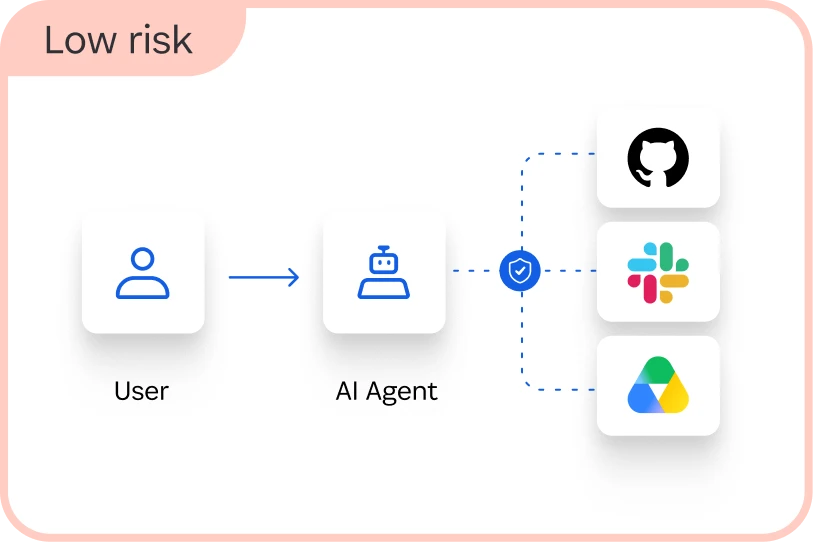
Human delegated
These agents use delegated access from the person who launched it, carrying their permissions and their identity, with credentials that expire. Examples include: Coding assistants, workplace scheduling agents, and operations and CRM support agents.
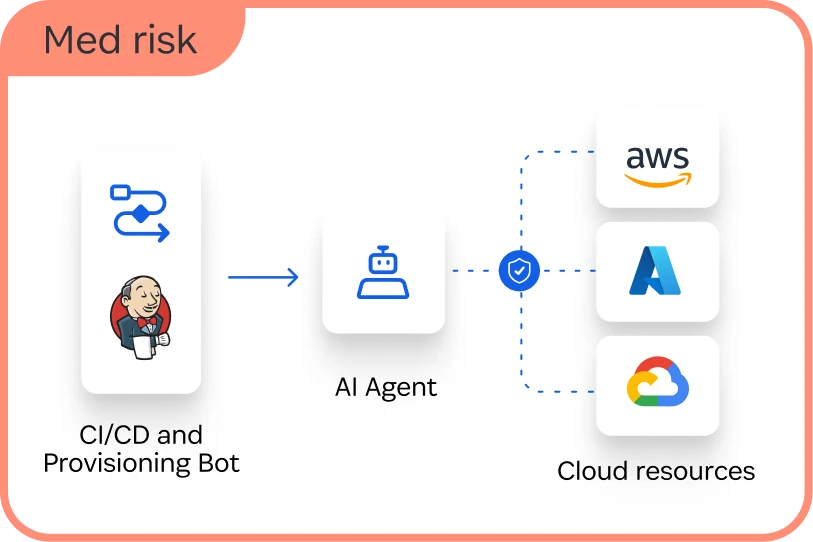
Machine bound
A workload identity for AI agents is scoped exactly for what the job needs, reducing over permissioning and eliminating shared credentials. Examples include: CI/CD pipeline agents, pull request review agents, HR provisioning assistants.
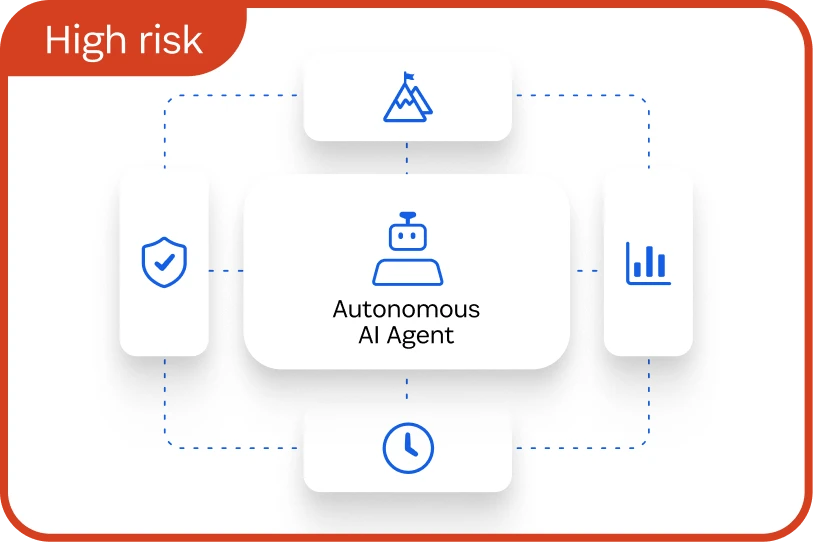
Fully autonomous
Autonomous agents are high risk and should operate with tightly defined guardrails, least-privilege access, and continuously verify trust as conditions change. Examples include: Full build-and-deploy agents, supply chain rerouting agents, and security remediation agents.
Classify where agents run
Local deployment
Agents run on developer devices, IDE plugins, local MCP servers, or desktop AI assistants. They are close to users, but harder to govern.
Remote deployment
Agents run in containers, CI/CD pipelines, or SaaS platforms, where shared service accounts and API keys can blur identity.
Hybrid deployment
Agents move between local tools and remote APIs, creating credential exposure when identity does not carry end to end.
Classify what agents access
User data and personal resources
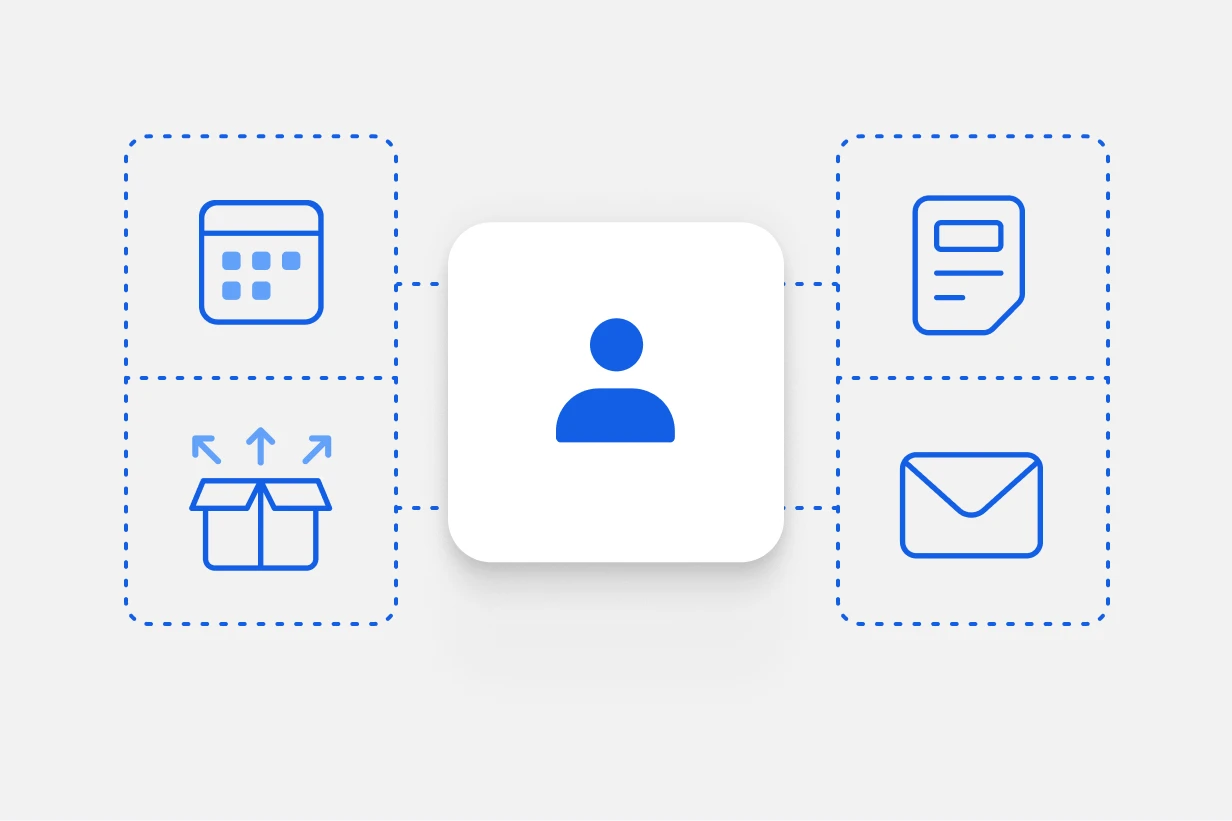
Agents accessing calendars, email, documents, or files on behalf of a named user. The delegation scope must match exactly what the user intended to share, nothing more.
Internal tools and applications
Agents accessing corporate SaaS, internal APIs, ticketing systems, code repositories, or databases. Often authorized via OAuth apps with permissions granted once and never reviewed.
External APIs and third-party services
Agents calling external providers, like AI APIs, payment systems, partner platforms, or public web services. API keys are typically long-lived and stored wherever the agent can find them.
Infrastructure and cloud resources
Agents with access to AWS, GCP, Azure, databases, or storage buckets. These carry a very high blast radius.
Three scenarios, one AI agent identity architecture
No matter your role, 1Password gives you the architecture and playbook for operating safely in an AI-first world.
Frequently asked questions
What is AI agent identity?
AI agent identity is a verifiable identity assigned to a software agent, not just the human or service account behind it. It helps teams authenticate the agent, authorize what it can access, issue short-lived credentials, and audit actions back to the right user, workload, device, or policy.